Cannabis can impact your teen’s health

Get the facts and tips for tricky questions.

Download the Toolkit

TAKE THESE SIMPLE STEPS TO KEEP KIDS SAFE

Learn the facts

See how weed impacts developing brains

Our brains are growing and fine-tuning connections until we reach our mid-20s. Using cannabis as a teen can disrupt this growth and impact mental health. 1

HERE'S HOW WEED AFFECTS TEEN MENTAL HEALTH

1. Teens are 2x
more likely to develop depression
Research shows that teens who use cannabis recreationally have increased chances of experiencing depression compared to teens who don’t use. 2, 3, 4
2. Weed can make feelings like social anxiety worse
THC messes with the amygdala, the part of the brain that controls emotions, making it harder for teens to manage stress. 5
3. THC can lower some of the brain's “feel-good” chemical signals
Using as a teen can reduce dopamine production in the brain, making it harder for teens to feel happy on their own. 1, 6, 7, 8
4. Teens are 4–7x more likely to become dependent
Teens who start using before age 18 are at higher risk of developing cannabis use disorder and may find it difficult to quit later in life, even if they experience negative impacts from cannabis.19

Prepare for questions

Be ready to answer tricky questions or comebacks.

Teens' main source of news is social media, but what they hear about cannabis from influencers or friends can make it confusing to understand the real risks. That's where you come in. You can help teens sort fact from fiction no matter what they throw at you.
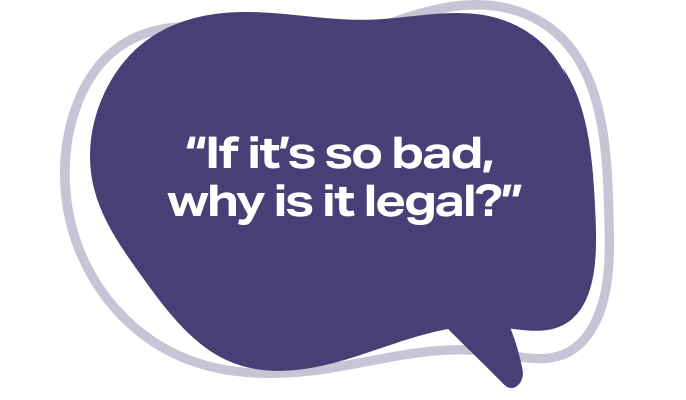
Good question. Cannabis is only legal for adults over 21. Your brain doesn't finish growing until you're in your mid-20s. If you use weed before then, THC can harm your hippocampus, cerebellum, and
amygdala―putting your memory, attention span, coordination, and mental health at risk.

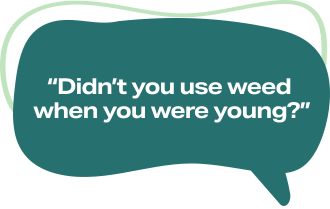
I did, but back then we didn't know it could harm teen brains, and weed wasn't as strong. Cannabis today contains much higher amounts of THC than even 10 years ago. Any amount of THC is harmful to your brain, but the higher concentrations in modern weed come with big impacts too.

That doesn't mean it's safe for you right now. Even though it's from a plant, cannabis contains the chemical THC. Because your brain is growing, the effects of THC are stronger and can impact how your brain functions, even causing long-term damage.

More FAQs

Start talking

Know how to explain the risks to your teen

Teens hear a lot about weed from their friends and social media, making it even harder for them to understand the real risks. By starting the conversation and giving them the facts, you can help protect their mental health.
Start early
Normalize talking about cannabis before kids consider experimenting. That may be as young as 10 years old.
    Keep it casual
    Family meetings and lectures can be intimidating for kids. Find low-stress, easy moments, like in the car on the way to school, to chat about the risks.
      Stick to science
      Exaggerations won’t help. Base your conversation on science, like how teen use can impact brain development and mental health.
        Talk with, not at
        Keep the conversation two-way by listening to, acknowledging, and encouraging their thoughts and questions—without judgment.

          Continue the conversation

          Get free resources to learn more

          Even if teens act like they’re not listening, what you say about weed influences their decisions and helps them make more informed choices that can protect their health. Get more reasons to talk, plus tips to guide your future conversation, below.

          Download the Toolkit

          Don’t have time for a deep dive? Read our quick guides.

          Additional Resources

          Substance Abuse and Mental Health Services Administration

          Provides information on the risks of cannabis use

          Visit the site

          Maine Crisis Line

          Provides judgment-free support for parents

          Visit the site

          Centers for Disease Control and Prevention

          Provides data, information, and FAQs on cannabis

          Visit the site

          Good to Know Maine

          Provides information on youth cannabis prevention

          Visit the site

          Sources